
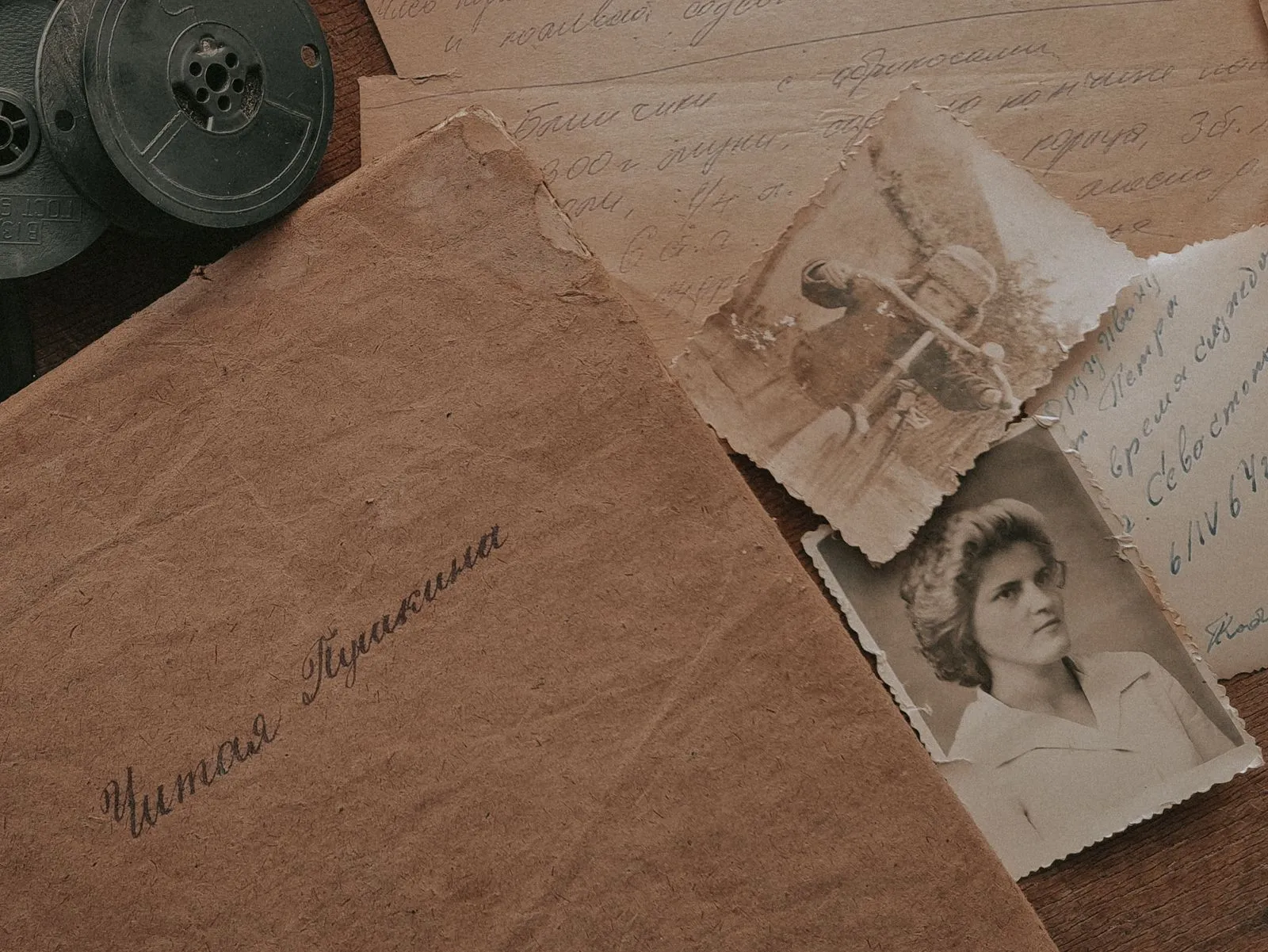
Before searching Italian archives, take stock of what your family already has. A photograph, a handwritten letter, or a certificate may hold a name, date, or place that guides your next step. Start by gathering materials, recording what each item says, and noting what remains uncertain. This simple process helps you avoid searching with incomplete details and gives relatives a clear way to contribute. You do not need to solve every mystery at once; begin with one person or family line.
Gather and Protect Family Materials
Ask relatives whether they have photographs, birth or marriage certificates, passports, letters, prayer cards, military papers, or family trees. Explain that you want to scan or take notes, not remove anything from their care. Keep original documents in a safe, dry place, and handle fragile items gently. For photographs and papers, make digital copies before writing notes or labels; never mark an original to record a guess.
Create a folder for each household or family line, then give every digital file a descriptive name. Include the person or event, an approximate date if known, and the source, such as “Maria_Rossi_wedding_photo_estimated_1930_aunt-Lucia.” Keep a separate copy of your files. If relatives share scans by email or text, save the original image and note who supplied it.
Read Certificates for Research Clues
For each certificate, record the document type, the person named, dates, locations, parents, witnesses, and the issuing office. Copy spellings exactly as they appear, even if they differ from family usage. Separate the event date from the date the document was created or registered. A birth certificate, for example, may include details that point to parents or a town worth investigating.
Use a simple table with columns for the detail, exact wording, source, and confidence. Mark unclear handwriting or missing information as unknown rather than filling gaps from memory. A certificate issued later in life may repeat information supplied by someone else, so note who reported the facts when the record says. This distinction will help you compare documents without treating every entry as equally certain.
Study Photographs and Letters
Inspect the front and back of each photograph. Record any caption, studio mark, handwritten name, address, uniform, or visible landmark, and describe what you can observe without assuming who is pictured. Ask relatives to identify people separately, before showing them one another’s guesses. Record each person’s identification and how they know it; family members may recognize someone but remember the name or relationship differently.
For letters, transcribe the text as written and keep the original spelling. Note the writer, recipient, postmark, date, language, and places mentioned. If you cannot read a passage, mark it as unclear and return to it later. Translate only after preserving the original wording. A town name, a relative’s nickname, or a reference to a local event can become a useful lead, but confirm it against other evidence.
Record Stories and Set Your Next Step
Talk with relatives one at a time and ask open questions: What did you hear about the family’s hometown? Who told you? Which names or relationships are you unsure about? Write down their exact phrasing where possible, along with the speaker and when you spoke. Treat stories as leads rather than proven facts, especially when they include approximate dates, changed surnames, or uncertain place names.
Make a timeline for one ancestor, listing each known event and its source. Then write down the most important unanswered question, such as a birthplace or parents’ names, and list the document that might answer it. Search archives only after you have checked spellings, date ranges, and place-name variations. This focused plan helps you choose relevant records instead of collecting documents that do not address your question.
A careful review of family documents turns scattered clues into a workable research plan. Preserve originals, record sources, separate confirmed details from family stories, and focus on one unanswered question at a time. When you are ready to organize your next steps, Lakefront Ancestry can help you assess the clues you have gathered.